
Discover all the news and articles from TNUMIS Magazine exclusively
Alves dos Reis: The Man Who Printed His Own Fortune
The history of numismatics would not be complete without mentioning the controversial figure of Alves dos Reis, a Portuguese forger whose actions left a lasting mark on the world of currency. His complex and turbulent journey sheds light on the inner workings of currency counterfeiting, a practice combining deception and a deep understanding of financial mechanisms.
The Beginnings of an Extraordinary Forger
Alves dos Reis, whose full name is Artur Virgílio Alves dos Reis, was born in 1896 in Lisbon, Portugal, into a petit bourgeois family. At the age of 18, he gave up his engineering studies and married an upper-middle-class woman. He struggled to win the esteem of his in-laws, especially after his father, a mortician, went bankrupt, and decided to try his luck in Angola, then a Portuguese colony, to make his fortune.
In no time at all, he was promoted to railroad manager. How did he get into this position with no degree and no experience? By forging a diploma from an Oxford school, the Polytechnic School of Engineering, which never even existed. Second trick in Africa: with a bad check, he became majority shareholder in Société des Chemins de Fer Transafricains d’Angola.
Back in Lisbon in 1922, he took over the reins of Ambaca, a struggling American car dealership, with which he issued numerous bad checks. He tried to get his hands on the Angola mining company, but his honesty was finally compromised. He was accused of embezzlement and arms trafficking. He was tried in Portugal in 1924, but served only one month in prison, claiming to be the victim of a conspiracy.
The Plot of the Century: Deceiving a National Bank
Those few weeks in prison did nothing to quench his thirst for money. Nothing seemed to stop him, and it was during this period that he hatched his Machiavellian plan.
He decides to challenge financial institutions by forging a contract in the name of the Bank of Portugal, with the help of several accomplices, all prominent figures. One of them, the Dutch financier Karel Marang van Ysselveere, manages to meet with the director of the British printing company Waterlow and Sons, where escudo banknotes are produced. It is at this moment that his plan takes on a concrete dimension.


“Fake” banknotes… yet perfectly genuine
He places an order for tickets under the pretext of a development loan for Angola. For this reason, the banknote serial numbers can be the same as those already printed for Portugal. A whole host of documents from the Banque de France justify the request. Of course, they’re all forgeries, perfectly forged by Arthur Alves dos Reis.
What makes the case even more astonishing is that the banknotes were perfectly authentic, as they were printed by the very same official printer used by the Bank of Portugal.
The subterfuge was a success. On November 17, 1922, Waterlow and Sons Limited printed 600,000 banknotes of 500 escudos, bearing the effigy of Vasco de Gama. The bills were transported to Portugal in Dutch diplomatic bags, thus avoiding any checks.
When It All Falls Apart
Although Reis was behind the project and the author of the forged documents, he received only 25% of the profits, which nevertheless enabled him to set up his own bank, Banco de Angola e Metrópole.
With this money, the counterfeiter Alves dos Reis decided to set up the Bank of Angola e Metropole and to offer credit so as to be able to judiciously insert counterfeit banknotes into the monetary circuit. At the same time, he led a life of luxury. He tries to buy the shares needed to take control of the Bank of Portugal, in order to thwart any investigations into his fraud, but fails.
His lack of discretion finally unmasked him. The press soon took an interest in this wealthy man who was lending money at rock-bottom rates. On December 5, 1925, the newspaper O Século revealed the fraud. The banks checked their vaults and 500 escudos bills. They discovered many bills with duplicate serial numbers.
Alves dos Reis is finally arrested. He was 28 years old. After a 5-year trial, he was sentenced to 20 years in prison in 1930. He was finally released in 1945 and returned to Angola, where he attempted a last-ditch swindle, to no avail. He died alone and penniless.
This fraud against the Bank of Portugal is still considered today to be one of the most successful scams ever carried out against a national bank. The story of Alves dos Reis is that of a man whose ability to manipulate systems led him to challenge the very foundations of the monetary system. His skill and audacity combine to create an enigmatic figure whose actions continue to intrigue numismatists and history enthusiasts. He embodies the archetype of the forger, capable of manipulating the symbols of wealth and power.
More than just a fraud, the Alves dos Reis affair reminds us that the value of money ultimately rests on trust.
Sources :
Mon Lisbonne
Wikipédia
Last published articles
The Sauvionnières Hoard: An Incredible Discovery in an Old Barn
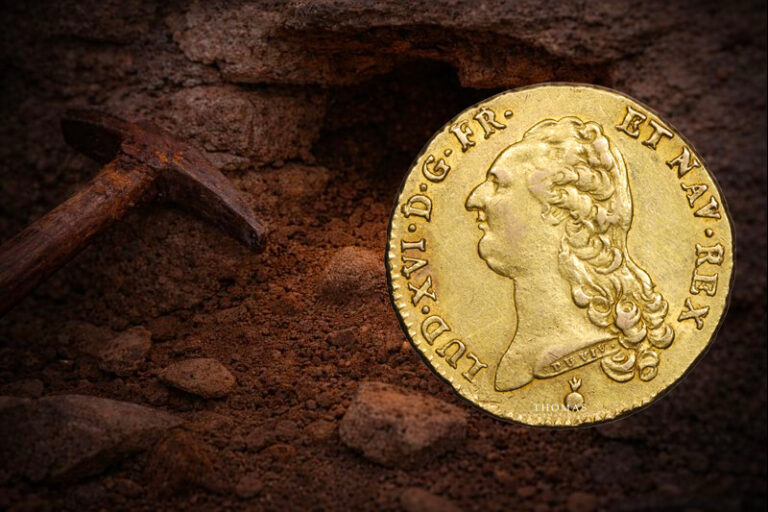
Sometimes, history emerges where you least expect it. In Les Sauvionnières, a small hamlet in the commune of Vallet, a single blow of a pickaxe was enough to bring more…
The Marblehead Hoard : an incredible discovery beneath a colonial house
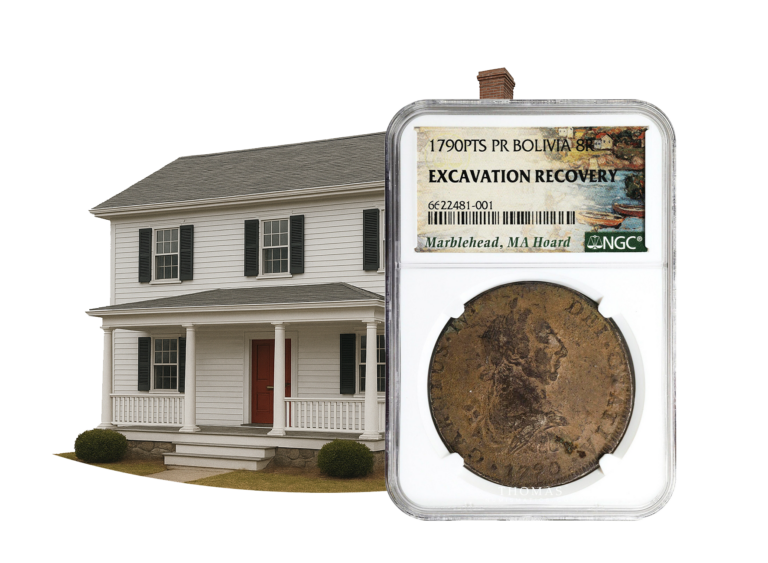
There are discoveries that completely reshape our understanding of monetary history. The Marblehead hoard, uncovered in the small coastal town of Massachusetts, is one of them. While renovating an old…
The Valenciennes Hoard : The Buried gold coins of the Sun King
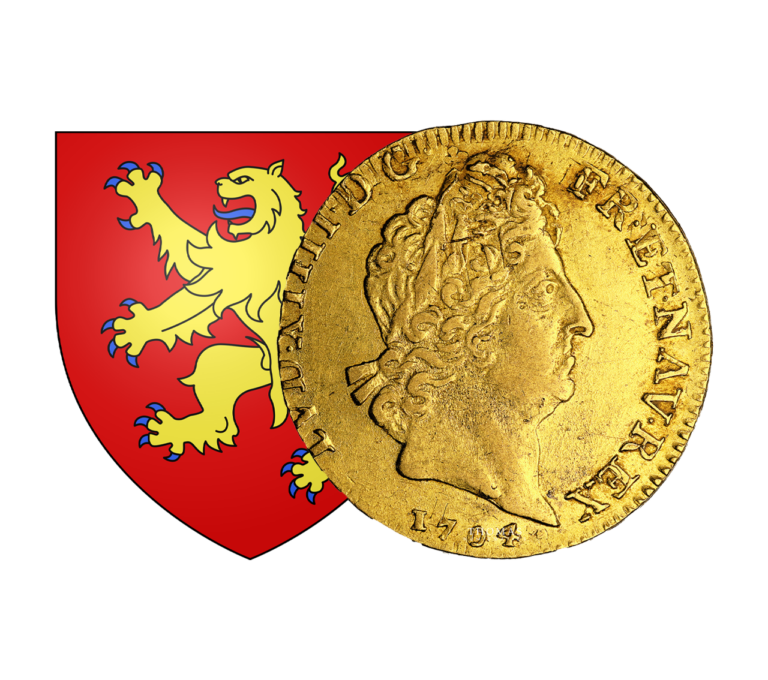
The Treasure of Valenciennes remains one of the most spectacular numismatic discoveries ever made in France. Unearthed by chance in 1949, this treasure contains thousands of gold and silver coins, bearing…