Discover all the news and articles from TNUMIS Magazine exclusively
The Bazas Hoard: 1,010 Coins Hidden in a Wall for Five Centuries
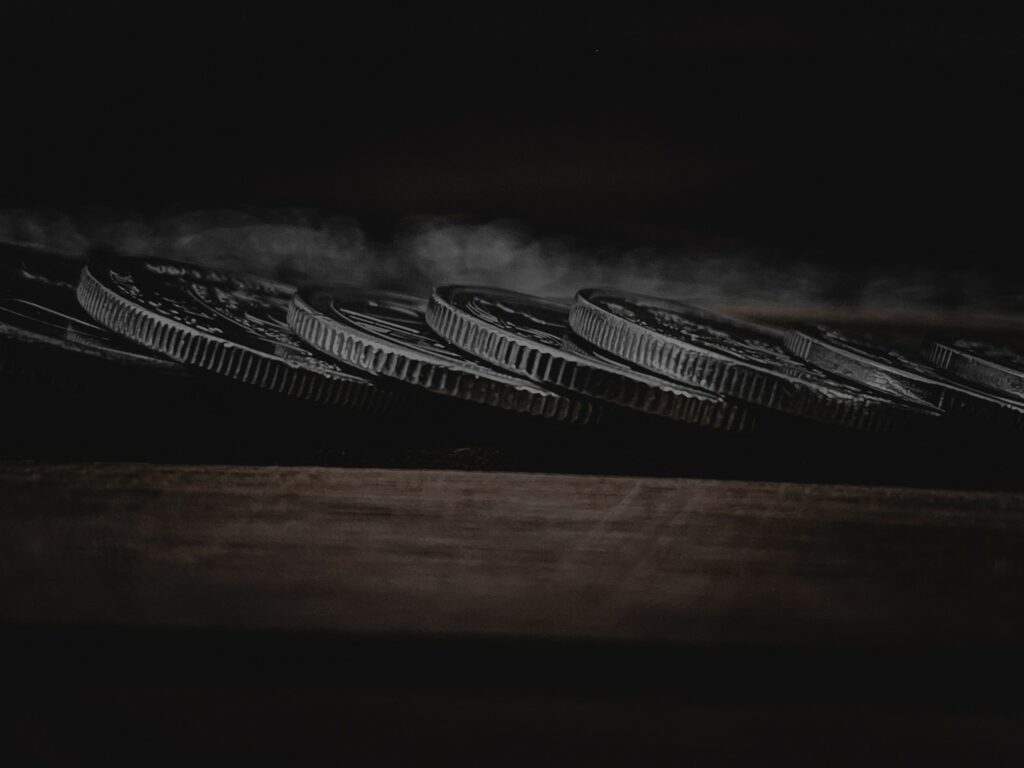
Hidden within the thick stone walls of an old house, the past had lain undisturbed for centuries. In May 2004, in the heart of Bazas, in the Gironde region of southwestern France, a simple renovation project brought an exceptional hoard to light: 1,010 gold, silver and billon coins, concealed for more than five centuries.
Now known as the “Bazas Hoard”, this remarkable assemblage provides a fascinating insight into wealth and the circulation of coinage across Europe at the end of the Middle Ages.
A Hoard Hidden in the Stone
The coins had been concealed within the thick wall of an old house.
One of the earthenware pots contained 157 gold coins, while the second held several dozen silver coins. Numerous smaller billon coins had also been placed loose within the hiding place.
A total of 1,010 coins were discovered.
Who could have owned such a fortune? Specialists have suggested that the owner may have been a wealthy merchant, a prosperous townsman, or a local notable, perhaps involved in the region’s commercial trade.
But his identity remains unknown, as does the reason why he never returned to recover his hoard.
Coins from Across Europe
The Bazas Hoard is also remarkable for its extraordinary diversity.
Alongside the French coins were pieces from various regions of Europe, including Spain, Italy, Flanders and England.
This diversity reflects the importance of trade at the end of the 15th century. At the time, Aquitaine was crossed by major trade routes linking Bordeaux with the rest of the kingdom and various regions of Europe.
The hoard thus provides a remarkable snapshot of monetary circulation at the end of the Middle Ages.
A Hoard Buried in the 1480s
The most recent coins allow the hoard to be dated to the final decades of the 15th century.
Initial studies suggested a date around 1483, the year Charles VIII ascended the French throne. However, the study of certain coins suggests that the hoard was deposited slightly later, probably around 1486.
The hoard was therefore likely concealed during a pivotal period, between the end of the Middle Ages and the beginning of the Renaissance.
Why?
No specific event known to have occurred in Bazas can explain the hoard’s concealment with certainty. Its owner most likely wished to keep his fortune safe, but may have died before he was able to recover it or reveal the location of the hiding place.
The wall would then keep its secret for more than five centuries.
From the Wall to the Auction Room
After its discovery, the hoard was studied and catalogued before being offered at auction.
The auction took place on 29 October 2005 in Angoulême, with the assistance of numismatist Françoise Berthelot-Vinchon. A detailed catalogue was published to present the various coins.
Estimated at between €150,000 and €300,000, the hoard ultimately sold for around €350,000.
Some rare coins attracted particularly high bids. One Spanish gold coin struck in Burgos sold for €24,000.
The sale, however, resulted in the 1,010 coins being dispersed among different buyers, making it more difficult to study the hoard as a whole. The catalogue and inventory compiled before the auction therefore remain essential resources for researchers.


Far More Than a €350,000 Hoard
Beyond its market value, the Bazas Hoard represents a valuable source of information for historians and numismatists.
The remarkably diverse origins of the coins demonstrate just how extensively goods, people and money were already circulating across Europe at the end of the Middle Ages.
But above all, its story retains an air of mystery.
More than five centuries ago, someone gathered a fortune, concealed it behind the stones of a wall, and probably intended to return for it. He never did.
For generations, the inhabitants of this house lived just a few centimetres away from a hoard, completely unaware of its existence. It was not until May 2004, during renovation work, that the 1,010 coins of the Bazas Hoard finally came to light.
Although the coins have since been dispersed, the two earthenware pots discovered with the hoard have survived through the centuries and remain with us today. Illustrated in the catalogue of the 2005 auction, they remain precious physical witnesses to this exceptional discovery.
We are privileged to offer these two pots for sale today, both in our shop and in our catalogue. Hidden within a wall for more than five centuries, these modest vessels now stand as tangible witnesses to an extraordinary story: that of a forgotten fortune, concealed from view for generations before finally re-emerging more than 500 years later.
Sources:
- Françoise Berthelot-Vinchon, The Bazas Hoard, catalogue of the auction held on 29 October 2005.
- CGB Numismatique, documentation relating to the Bazas Hoard.
- Le Journal des Arts, articles on the discovery and sale of the Bazas Hoard.
- Numista, numismatic and bibliographic documentation on the Bazas Hoard.
- La Dépêche, “A 15th-Century Hoard at Auction in Angoulême,” 29 September 2005.
Last published articles
The Story of an Eloi Pernet Collection, Told by Its Collector
On the occasion of the presentation of this remarkable Eloi Pernet collection on Thomas Numismatics, we wanted to give its owner the opportunity to share his story. A passionate numismatist…
Nos monnaies dans L’émission LEGEND

À l’occasion d’un épisode de LEGEND consacré au Bitcoin plusieurs monnaies issues de notre collection ont été sélectionnées pour apparaître à l’écran.
Découvrez un extrait de l’émission…
Alves dos Reis: The Man Who Printed His Own Fortune

The history of numismatics would not be complete without mentioning the controversial figure of Alves dos Reis, a Portuguese forger whose actions left a lasting mark on the world of…